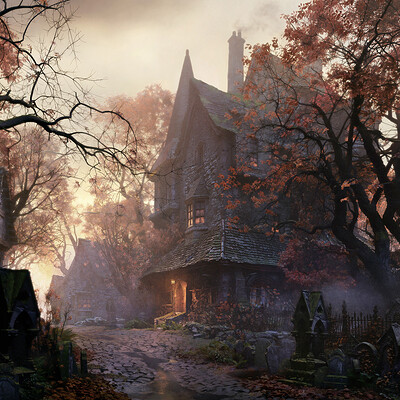
Official Traveller’s Handbook & Character Guide
SPLIT’S REACH
City State of the Marcelis Peninsula — Ternia

A guide for those arriving for the first time: the city, its people, its history, and a place for you within it.

Session Zero Packet  ·  For Players

Welcome to Split's Reach

Beneath the bustling neighbourhoods, the roads and waterways of Split’s Reach a fuse has been lit. Dark designs unfold in dimly lit parlours and smoky speakeasies.

Split’s Reach is a city-state on the Marcelis Peninsula, the largest in the world of Tanah, sitting inside a valley that shouldn’t exist — a deep scar carved by a magical catastrophe forty years ago that killed eighty thousand people and triggered a war that lit a whole continent aflame. Now, the war is over. Treaties have been signed. The city is now thriving. It has a hearty economy, a railway and port that brings travellers from across Tanah, and a Year Festival that brings dignitaries from every nation. It is, by most measures, doing fine.

You are playing a group of people who, through coincidence or design or some negotiation between the two, end up entangled in something that is not fine at all.

This is primarily an urban investigation campaign. Most of your time will be spent in Split’s Reach itself — in its streets, its parlours, its back rooms and public halls. You will talk to people. You will follow threads. You will make guesses - sometimes wrong and sometimes right. There will be combat; there will be moments of real danger; but the real meat of the campaign lies in the investigation.

What kind of story is this?

This is a political mystery thriller. The campaign has a sixty-day clock running in the background; events are moving whether the party engages with them or not, and the world doesn’t pause while you decide what to do. Use your time wisely!

The tone sits somewhere between a noir detective story, political drama and character drama. Think of a cross between Arcane and Sherlock Holmes: A Game of Shadows. The city is filled with places and characters that you can talk to and will talk to you too. People have their own agendas. Information is a resource. Trust is earned. And the antagonist of this story is not a monster — they are a person with an iron will and lethal conviction, who has decided that a terrible thing must be done.

Content Note

This campaign contains the following themes: if you feel uncomfortable discussing and roleplaying any of the topics, please let me know.

  • War and its aftermath: The Ternian War ended 27 years ago. Its legacy is everywhere; displacement, grief, survivor’s guilt, political fallout, and generational trauma. Some characters may have lived through it.
  • Industrial and political violence: Terrorism, assassination plots, arms manufacturing, and state-level conspiracy are central to the plot.
  • Grief and deterioration: Certain central characters experience a slow mental decline. Themes of loss, exhaustion, and acceptance will recur.
  • Cosmic horror: A secondary thread involves entities that cause memory loss and psychological disturbance. This is not the main campaign but it is present.
  • Organised crime: Includes extortion, human trafficking, smuggling, and coerced labour.

The table, in brief

We have a rotating group of up to eight players. Not everyone will be at every session — that’s totally fine! Characters can step in and out, and you are encouraged to discuss things out of character and out of game. If you can only play occasionally or would rather not go through the rigamarole of creating a character, there are premade characters in this packet designed for exactly that. If you want deep plot investment, those options are in here too. There is no wrong way to engage.

The Bells at Seventh Hour

If you stand in Greenvale at dawn, you can hear the Observitarium bells before the first carriages start; they have rung at the seventh hour, every morning, for fifty-three years. They were rung the morning after the Marcelis Disaster, and they were rung the morning the Ternian War ended, and they will be rung tomorrow.

The city has built itself around the sound — bakers measure their first proving by it, dock foremen call the morning shift to it, old men in Valleyside set their watches by it even though their watches keep better time than the bells do. It has become the kind of fact nobody questions, the way nobody questions the smoke columns from South Terminium or the fog at the bottom of the valley.
The World of Tanah

Tanah is a world that has recently, and reluctantly, entered its industrial age; technology and magic coexist imperfectly, Nations that were ancient enemies share uneasy treaties, and the echoes of a recent catastrophic war shape the modern landscape.

The Shape of the World

Tanah is home to several distinct continental regions, each with its own peoples, politics, and culture. The campaign takes place in Ternia — a large continent that has, for the last century, been the site of some of the most consequential events in the world’s recorded history.

To Ternia’s west lies Gandaria, a maritime empire built on naval supremacy and a culture of ‘might makes right’. To the northwest, the long-lived Venerati of Aeolia maintain a guarded, insular empire with millennia of accumulated knowledge. To the northeast, Haedon — Aeolia’s diplomatic and ideological rival, also Venerati, and more open to the world. Far to the east, the island-nation of Kyōfu leads the world in technological development. Forming the heartland of Ternia itself is the young nation of Duris, a recently unified coalition of southern kingdoms that survived the war. And, to the east of Duris lies Dyridd, a mystical nation of Tairngireans and other Fey entities that, until recently, had been shuttered away from reality by a time-bending aspectological phenomenon.

What the Guns Changed

Until roughly a century ago, magical ability was the great differentiator in warfare. A kingdom with powerful spellcasters had a decisive advantage over one without. Then came the common arquebus — and later the rifle, the artillery piece, the revolving pistol — and that advantage evaporated over a mere couple decades. This period, called the Riflemen’s Revolt across South Ternia, reshaped politics, unified kingdoms under new banners, and sowed seeds of resentment and ambition that would eventually become the Ternian War.

The world today is industrialising fast. Trains, factories, telegraphs, firearms; these are commonplace in developed cities. Nowadays magic – true magic – is rarer than you might expect. Roughly one person in forty can cast meaningful spells. Most people live and die without ever witnessing anything more than a minor cantrip or a magical ability. A working spellcaster is remarkable. Several working spellcasters in one place is notable.

A Note on the Trains

Twenty years ago, a journey from Split’s Reach to the Royal Court at Bainhurst took the better part of a month by carriage and ferry; today the same journey takes fifteen hours by rail and water, and the train is rarely full. Most travellers cannot afford the fare; most travellers do not need to make the journey, yet the train runs anyway — six times a week, because the postal contracts pay for it. The world is shrinking, though not for everyone — only enough.

The Ternian War — Very Briefly

Fifty-two years ago, Aeolia declared war on the Corin Kingdom (now part of Duris) after the Corin Kingdom refused to provide aid following a devastating magical accident on the Marcelis Peninsula – the Marcelis Disaster. The war expanded rapidly to include a Gandarian opportunistic assault, lasted 28 years, and killed approximately eight million people, both military and civilian. It ended at the Split’s Reach Summit of Ceasefires — signed in this city, on the ground of the disaster that started it.

The war produced four things relevant to this campaign: the nation of Duris, the Gandarian expansion into the Merakarta Isles, the political rift between Aeolia and the rest of Ternia that still simmers today, and the city of Split’s Reach itself.

A Note on Dates

The Ternian calendar operates on the Hespheric Cyclical Calendar. The year divides into a Sleeping Period, a transitional Wax (and the opposite Wane), and a Waking Period — each affecting the strength of different kinds of magic. The campaign begins in late Requiem (the final month of the Sleeping Period), with the Year Festival, a major diplomatic and cultural event, scheduled for the end of Proelium (early Waking Period), approximately seventy days later. The year according to the Hespheric Calendar is 260 days long – so ages and timespans will look different for us on Earth. A child reaches adulthood at 25 years old; a 50 year old man on Earth is 70 on Tanah; most (human lifespan) people expect to live to 100 years old on Tanah.

What the War Left Behind

There is a particular grey in the hair of men and women in their fifties and sixties that you will see often in Split’s Reach, and it is not entirely natural; aspectological burns leave their marks slowly, and the survivors of the Battle of Terminium Valley have been losing colour for twenty-seven years.

They do not, generally, talk about it — if you sit in a Greenvale tea house and ask the wrong question of the wrong customer, the conversation will end politely and immediately. The war is not unmentionable, simply private; Tanah does not share that particular grief well, and each survivor carries their own.

If your character is old enough to remember the war, they may sport this silvery crown of hair; they may also sport certain scars or old wounds — mementoes of a dark period in history.

Split's Reach

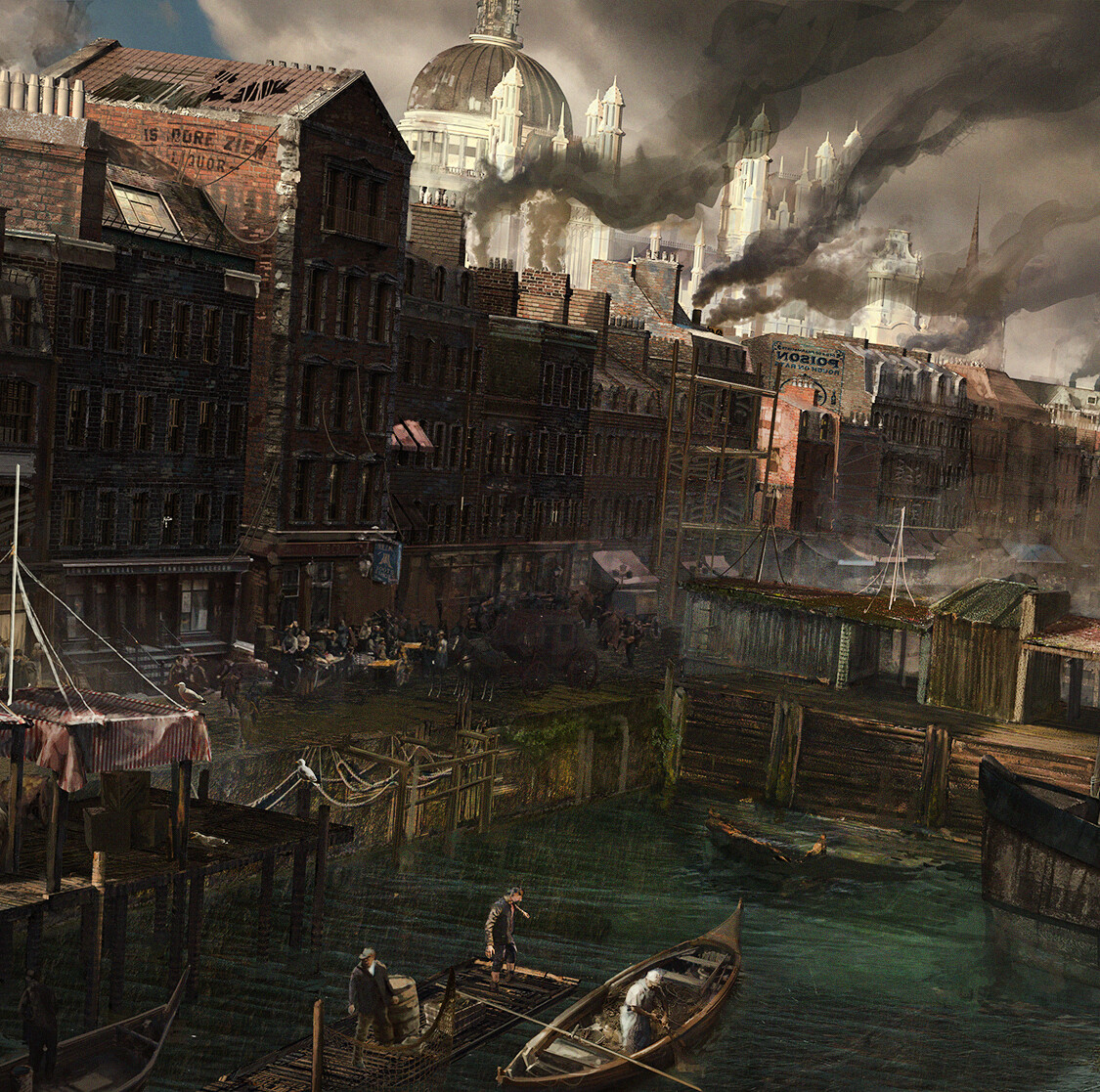
A view of the harbour at Split's Reach

Split’s Reach is not quite like anywhere else in Ternia. One of the largest cities in Tanah, and built by people who decided not to be defined by past rivalries and hatred, Split’s Reach grants those that come to it a fair shot at carving out a good life for themselves.

The city sits across the width of the Marcelis Peninsula — a narrow strip of land running south from the Aeolian border, with the Marcelis Channel to its east and the vast Naritanic Ocean to its west. Running through the centre of the peninsula is the Terminium Valley, a vast fissure carved by the magical wrongwarp event of 1416 that killed eighty thousand people. The valley floor sits at — and in places below — sea level: a consequence of the wrongwarp’s force on low-lying coastal rock, and the reason a pale, heavy fog gathers at the bottom most mornings and burns off slow.

The six districts of the city — South Terminium, Eldershore, Shoresby, Greenvale, Stockhill and North Terminium — reflect this geography directly. Newer buildings occupy the reclaimed valley floor, where ground had to be drained and shored before anything could be built on it. Older, wealthier districts sit on the rim, founded on more stable rock. The difference in altitude between the poorest and the richest parts of the city is visible to the naked eye.

Split’s Reach is a fully independent city-state. It answers to no nation, and its strategic position, sharing borders with three major nations and with easy naval access to two more, poise it on the world stage as one of the most influential cities in the world. It is administered by a civic council appointed through a complex merit-and-election hybrid system.

The city is currently in late Requiem, sliding into the hotter period before the Waking. Festival is in sixty days. Traders, performers, diplomatic delegations, and security details are already arriving.

Districts

  • North Terminium North Terminium

    The northernmost district, clinging to the steepest section of the valley rim closest to the Aeolian border. Narrow and near-vertical — streets are switchbacks and staircases cut into the cliff face, buildings stack rather than spread. Home to a large part of the city’s Venerati community: long-lived, quietly influential, and possessed of the kind of political weight that comes from voting in every civic assembly for sixty years running. Offers the most spectacular southward views in the city.

  • Stockhill Stockhill

    The western rim district, facing the Naritanic Ocean. Once quiet residential, it is now undergoing a huge transformation. A new Naritanic-facing marina is going in, cutting through the cliff to open passage toward the Merakarta Isles. Old residents and incoming maritime industry workers share the same terraced streets with mounting unease. The railway terminus sits at its northern edge.

  • Greenvale Greenvale

    The flattest part of the city, and its institutional heart. The Observitarium is here, along with the Administration building, Valleyrise House, the Crown Precinct, and the city’s better hotels and restaurants. This is the face Split’s Reach shows to visiting dignitaries. Clarke Industrial’s senior offices occupy a well-appointed building on the main boulevard.

  • Shoresby Shoresby

    The city’s working harbour on the Marcelis Channel. Ship carpentry, fisheries, warehouses in long rows, the smell of salt and rope and rendered fat. Raucous and multilingual — Gandarian traders dock alongside Durisian merchants and Aeolian patrol vessels. The warehouse end, known locally as Dockside, is where all kinds of criminals operate and where the city’s red light district runs without much administrative interest in stopping it.

  • Eldershore Eldershore

    The southern-western rim. The established money of the city lives here — merchant families, senior civic officials, retired professionals. Wide plots, maintained gardens. The southernmost edge rests at the foot of Fenhallow Forest — a dangerous area haunted by a vicious Fey entity.

  • South Terminium South Terminium

    The valley floor. The densest, loudest, lowest part of the city. Factories alongside tenements alongside markets, all of it crammed onto reclaimed ground. The four Clarke Firearms & Industrial smokestacks are visible from anywhere in the city. The working-class district: Glyntyrian ex-miners, Anaklintang labourers, Tairngirean craftspeople. The fog sits here longest in the morning.

The Marcelis Memorial

In a small park on the oldest part of the South Terminium valley floor stands an obelisk commemorating the 1416 disaster. It is always attended. Flowers are left, replaced, left again. The ground around it has been tested by the Observitarium multiple times — they say the medium displacement has mostly resolved. Mostly.

The Feeling of the City

Split’s Reach has its own specific texture: slightly grey, slightly formal, practical architecture mixed in with relics of the small towns that stood here before the outbreak of war. The permanent and pervasive smell of factory smoke from the valley mixes in with the scent of grilled fish from a roadside stall; the cloying weight of the morning fog battles the cool air rising from the waterways where Sinduja and other aquatic people begin swimming to work. A cosmopolitan mix of people reflects its history as a treaty city.

The Shape of the City

A morning’s walk in Split’s Reach will take you from the Shoresby docks up through Greenvale to the lower terraces of Valleyside, and that is enough city for most people in a single day. The docks at dawn smell of fish-oil and machine grease and the particular tang of Lintangese coffee that the morning shift drinks by the gallon; by the time you reach Greenvale you have passed three different markets, four temples to four different gods, and a Hunter who has already noticed you.

To cross the city end to end, from Shoresby to Eldershore or from South to North Terminium, would take you most of a day on foot; the carriages and trams are not vanity, they are the city’s veins and arteries.

The Peoples of Split's Reach

Split’s Reach is unique in Tanah in that it is a home for almost everyone. Waterways run alongside major streets for Sindujans and other aquatic people to swim through; half-size doors and passageways cut through most buildings for smaller Tairngireans and Glyntyrians to use. As a treaty city and trade hub, it has drawn in peoples from every major nation in Ternia and beyond.

Peoples of Duris & Dyridd

Southmen Human

The predominant human population of South Ternia. Practical, often well-travelled, and over-represented in manual trades and exploratory professions. Many veterans of the Ternian War are Southmen; many of the city’s working class are too. The most common sight in Split’s Reach.

Aridians Halfling

Originally from the County of Aridia, Aridians are famed for their craft traditions and their propensity for incidental fey magic — not powerful spellcasting, but the kind of inexplicable good fortune and subtle intuition that makes them excellent artisans and traders. The Artisan’s Assembly is predominantly Aridian-run.

Glyntyrians Dwarf

Southern, mountain-dwelling, proud, and somewhat insular by nature — though those who leave Glyntyr tend to be the adventurous outliers by definition. A notable Glyntyrian community works in Split’s Reach’s industrial and nautical sectors.

Tairngireans Feyfolk

The native people of the Tairngirean Wildlands. They come in several sub-types — Sprites, Gnomes, Shoonies, and others — all of them with deep connections to the First World. Many have settled in Durisian cities following the Wildlands’ return from the Feywild. The Observitarium employs several for their unique insight into Aspectology.

On Tairngirean Longevity

A Tairngirean of two hundred is a person who has watched three generations of Southmen friends grow up, marry, and die; they will tell you, if asked, that this is bearable, and they will tell you, if asked twice, that this is not the whole truth.

The Royal House solves this by marrying mostly within itself; the Crown Guard solves it by retiring its long-lived members to advisory roles, where they can watch new recruits grow into competence without having to bury them again; most ordinary Tairngireans living in mixed cities solve it by not making short-lived friends in the first place. A few do not — and those few tend to be remarkable.

Peoples of Kyōfu

Kitsune Shapeshifter

Fox-people with innate shapeshifting — all Kitsune can switch between their natural form, a fox form, and a “foreign” form that allows them to pass as another ethnicity. Known for being friendly, communicative, and occasionally mischievous. Represented in Split’s Reach’s civic administration and academic institutions. Don’t try to call out a Kitsune in public — it is considered to be very rude!

Nekomono Catfolk

The most numerous of the Kyōfuan peoples, and the most widely distributed. Free-spirited, socially fluid, common in all professions.

Tiangang Kenku

Raven-folk of few words and decisive action. Prominent in Kyōfu’s military and political circles despite forming one of the smaller demographics. Considered tactically formidable and socially enigmatic — they tend to observe more than they speak, and are generally underestimated by those who mistake reticence for passivity.

Pachongwa Lizardfolk

Practical, industrious, and at the absolute forefront of technological development. Pachongwa artificers helped father modern industrialisation. After near-extinction in a past war, their people rebuilt with remarkable discipline. In Split’s Reach they are often found in engineering, manufacturing and scholarly professions.

A Tiangang in Conversation

A Tiangang will not waste your sentences; if you ask one a question and they have nothing useful to say, they will not say anything, and this is sometimes mistaken for rudeness or for slow thinking. It is neither — it is a courtesy that the rest of Tanah has not, by Kyōfuan standards, yet earned.

When a Tiangang does answer, the answer will be exactly the length the answer requires, and they will then expect you to use it.

Peoples of Aeolia, Haedon & Gandaria

Venerati Elf

The oldest living race in Ternia — long-lived, extraordinarily knowledgeable, and deeply aware of both facts. They are also fewer in number than most ethnicities. Aeolians and Haedonians share this ethnicity but deeply different cultures; Aeolians are guarded and recently belligerent, while Haedonians are diplomatically active. A Venerati in Split’s Reach is usually an expert in some field or skill.

Anaklintang Orc

The “Star-children” of Gandaria — physically powerful, durable, and culturally proud. There is a small but established Anaklintang community here, mostly in the Shoresby trade sector.

Sinduja Triton

The nautical counterparts to the Anaklintang, the Sinduja are far more prolific across Split’s Reach; their natural inclination for nautical professions in great demand across many levels of the city — from civic engineering and shipwrighting to aquaculture and the arts. One of the most common ethnicities in the city.

A Venerati at a Foreign Dinner

A Venerati at a foreign dinner will eat slowly, using the correct fork and the correct knife and the correct napkin, and will be unfailingly polite; they will not enjoy the food, and they will not pretend to. If you ask whether the meal is to their liking, the answer comes truthfully — it is acceptable, thank you — in a tone that closes the topic forever.

This is not contempt. Venerati eat for sustenance rather than for pleasure, and they are quietly confused that other peoples do otherwise; if you would like a Venerati to enjoy themselves at your dinner, do not feed them, but ask them instead about something old. They will, in time, become eloquent.

On Playing an Outsider

Split’s Reach has been cosmopolitan long enough that most combinations of race and origin are unremarkable here. The interesting tensions are rarely about race itself — they are about national allegiance, wartime history, and class. A Venerati from Aeolia and a Southman from Duris can share a drink and a workplace without incident. The past is present, but the city has chosen to be more interesting than its grudges. Mostly.

Religion & Magic

Magic in Tanah is real, powerful, and poorly understood — even by those who wield it. There are no gods — in the sense that omnipotent entities with deific agency stalk the lands (at least as far as you know). There are things that behave like gods, though are ostensibly very real and still limited; and there are religions with real clerics and mages who attribute their power to the belief in a god as an icon; and a great deal of scholarly argument about the difference.

Magic: How It Actually Works

An Interlude on the Nature of Magic

From the notes of a visiting scholar, in conversation with one of the Observitarium’s foremost aspectologiers:

”…The Medium is a ‘substance’ that pervades all space, which entails that there is always matter, even when it appears as though there is not. Matter isn’t distinct from nothing — instead, it is more useful to us to envision all matter as ‘ripples’ in a great wide cosmic sea. Even intangible things, like light, sound and magic are just different types of ripple travelling through the sea. Ripple a body of water in the right way, you could create a great tidal wave, or perhaps draw a shape using a wake. I believe this is the foundation of our reality…”

— Tadhg McGwvain, Aspectal Mechanics

Tanah’s spellcasters operate mostly on traditions developed through trial and error. A scientific approach to magic — what is called aspectology — exists and is practiced, primarily through institutions like Split’s Reach’s Observitarium. The axes of spellcasting — arcane, primal, divine, occult — are essentially different methods to get to the same outcome: Arcane magic derives power from the practical understanding of aspectology and physical science; Primal magic derives its power from either folklore or from an innate understanding of the natural world; Occult magic derives its power from other supernatural entities, and is usually sacrificial or transactional in nature; Divine magic derives its power from entirely otherworldly entities.

Important to internalise: roughly one person in forty can cast practical spells. Magic exists, but a working mage is remarkable. As a mage, you’ll likely be one of the more unusual people in any room you enter.

The magic cycle matters. During the Sleeping Period, divine and occult casters are at peak strength; arcane casters are somewhat weakened. During the Waking Period, where much of this campaign will be set in, this reverses and the arcane gains power. Primal casters are unaffected by these changes.

An Aspectologier's Confession

Late one evening at the Observitarium, an old researcher will tell you, after enough wine, that the unified theory does not actually unify anything; it describes how magic moves, but it does not describe what magic is. The Medium ripples, and the ripples interfere, and the interference can be predicted with terrible precision — none of which answers the question a child asks: why does any of it work?

We do not know, the old researcher will say. We do not know what the sea is — we only know how it moves.

Gwynism

The predominant faith of Duris and Dyridd. Not a worship of gods but a relationship with the Fey — extradimensional entities from the First World whose influence overlaps with the material plane in ways that are real, measurable, and esoteric. The Amddiffyniad (pronounced “am-thiff-en-yad”) is its collected text of practical guidance on interacting with Fey — part religious doctrine, part household superstition, part field manual for encounters with Fey creatures.

Some notable Fey entities recorded within the Amddiffyniad:

The Lady of Nine Colors — A spirit whose presence is felt across the rim of the Arianrhod Mountains. Mostly benevolent and benign, though harsh and particularly vengeful to those that disrespect the forests she presides over.

Alva Lillia Nephymtirien — A particularly influential Fey for the people of Duris. Alva presides over the Royal Advisory Body and acts as a neutral mediator for governmental proceedings. Their official title is ‘Advisory Adjudicant’.

The Seven Greedy Bastards — A ‘council’ of seven fey spirits that dictate monetary gain and loss, incorporating various forms of capitalist market theory in modern versions of the Amddiffyniad. Many merchants and traders possess paraphernalia pertaining to the Seven.

The Legion of Rot — A ‘swarm’ of Fey spirits called Fensprites that set into unclean or old and stale food. They have the ability to bring about disease. Much of modern medical science is based on the study of fensprites.

The Witch of Fenhallow Forest — A particularly malevolent entity that haunts Fenhallow Forest, south of Split’s Reach. The currently preferred execution method of the most heinous criminals of Duris, as sacrifices to the Witch are needed to quench its thirst for blood.

A Gwynist Morning

The temple in Greenvale opens at the seventh hour, alongside the Observitarium bells, and the vicar — Cornelius Amerhart, a small man with a thinning ring of red hair — receives the morning’s first congregants without ceremony. They are mostly the same six people: a widow whose husband fought at Terminium and never came back, a baker’s apprentice whose mother is sick, a Tairngirean retiree who has been coming for forty years and whose quiet conversation with the vicar has, by now, lost most of its words.

Amerhart does not preach in the mornings; he listens, and he pours tea, and he says the Three Names of Gwyn at the appointed times. The work of Gwynism, he likes to say, is mostly the work of being there — gods are easy, but people are hard.

Kaikandō

The Kyōfuan spiritual tradition. Where Gwynism is relational and practical, Kaikandō is philosophical — concerned with the boundary between the Shinkai (True World) and the Reikai (Spirit World), and the laws governing their interaction. Widely observed in Split’s Reach’s Kyōfuan community, and respected as an aspectological reference even by those who don’t practice it.

Dewakah

The faith of Gandaria, and the most populous religion in the world. Dewakah is a polytheistic ethnic religion built around a vast body of mythological epic poetry. The three pillars of the faith are:

Surah (suh-rh) — The prime deity, the cosmological representation of the Eye itself: the supermassive black hole around which Tanah orbits. Surah is the ever-watching judge, the guardian and gatekeeper of the Firmament, the devourer of the unworthy. Depicted most often as a celestial tiger made of stars.

Induk (een-doo) — The Great Mother, The Sculptor. Induk is Surah’s wife and the creator of all living things, who shaped the world from stardust as a nursery. She is depicted most often as the Star Whale. Her symbol is the clay vase, or a potter’s turntable.

Kariyah (kah-rih-yah) — The Eternal Challenger, The Phoenix Warrior. The tailed moon symbol of Kariyah is on the Gandarian flag and is the face that most of the world thinks of when they think of Dewakah. Kariyah is the cosmological representation of Tanah’s moon, Karya — the embodiment of the mortal spirit. A mortal who ascended.

Other Faiths

Hespherity is the Venerati tradition of Aeolia and Haedon — less a religion than a civic ideology given sacred weight. Its practice centres on the Hespheric Collections — a 140-metre structure in the politically neutral city of Hespheria where every Venerati pilgrim writes out a decade of their life. There are no tenets. There is no creed. The only principle is that your actions will be read by every generation that follows you. Importantly: Hespherity has no tradition of spellcasting whatsoever.

Playing a Divine Caster

Divine casters in Tanah occupy an interesting position. They have real power. Whether that power comes from genuine deity, the subconscious construction of a personal “theorem,” or something else is a live debate — and your character may have strong opinions on it. The power is not in doubt. Its source is delightfully unclear.

Building Your Character

The most important thing about your character is that they have a reason to be in Split’s Reach and a reason to stay. Everything else follows from that.

Questions Worth Answering

  1. Where are you from, and why did you leave? Split’s Reach draws in people from across Ternia and beyond. Are you from Duris, trying to make your way in the treaty city? A Kyōfuan immigrant following the trade routes? Someone from Aeolia, which makes you politically complicated? A refugee from a place the war destroyed? Your origin shapes how you move through this world and who looks at you differently.
  2. What do you do for money? This is an urban campaign. Your character earns a living somehow. Investigator, courier, craftsperson, dockworker, minor administrator, academic researcher, former soldier, street-level operative — all of these have natural hooks into how the plot unfolds. The party will take on work. What kind of work fits you?
  3. What do you want? Not a grand life goal — something immediate and achievable. A promotion, a debt cleared, a person found, a secret kept. Something that an investigation into a city’s underbelly might accidentally complicate.
  4. What do you know about the Ternian War? It ended twenty-seven years ago. Characters over forty may have lived through it. Characters under forty grew up in its aftermath. Characters from different nations will have been on different sides, or have lost different things. This is worth knowing before you sit down at the table.
  5. Do you have magic, and how do you relate to that? If your character casts spells, they are unusual. They know they are unusual. How do they feel about it? Do they use it professionally, hide it, wear it proudly? In a city with an Aspectology institute and a Gwynist tradition, there are many ways to be a spellcaster — from celebrated research fellow to backstreet fortune teller.
  6. Who do you know in the city? You don’t need a web of contacts built in advance — that’s what play is for. But a single existing relationship is useful. A landlady who knows the neighbourhood. A former colleague. A regular at a bar you drink at. One person who will tell you things before anyone else does.

Notes on Tone

Characters here work best if they have a life they’re trying to maintain alongside whatever the plot throws at them. The investigator who also has rent due. The soldier who is also trying to stay sober. The academic who is also responsible for a younger sibling. The plot is big; the characters should feel human-scaled.

This campaign rewards attentiveness and lateral thinking over brute force. Characters who talk to people, ask careful questions, notice details, and take their time will do well.

Characters to Avoid

Avoid building a character with no reason to be in Split’s Reach, no functional social connections (real hermits are hard to play in an urban mystery), or one whose primary motivation is causing chaos — this is a collaborative investigation, not an improv chaos engine. Also avoid characters who would have strong ideological reasons to want the main antagonist to succeed; this is playable, but requires a conversation with the GM first.

A Note on Noticing

The campaign you are about to play rewards attention; it will not, generally, tell you what the important thing is. The important thing will be on the table, in plain sight, alongside several less important things, and the difference between them will be a matter of which detail you decide to remember.

Picture this: your character stops at a Greenvale bakery on the way home, the same bakery they have stopped at a dozen times before. The price the baker asks today is a few coppers higher than yesterday; the loaf has been cut unevenly, the crust split where it should not be split; the baker meets your eyes for a second too long, then for not long enough. None of this matters in any way the world will explain.

Then, walking home, you remember: the bakery has a standing contract to supply the Royal House garrison at the foot of Valleyside. And you turn to the rest of the table and ask, do you think the baker isn’t actually the baker?

Whatever sort of character you build — the sharp investigator, the brilliant scholar, the cheerfully oblivious barbarian who has never solved a mystery in their life — the noticing belongs to you as a player, separate from whatever your character would do with it.

Your Character & the Plot

You don’t need to know the plot in advance to build a character that fits into it. You need to be someone who would notice that something is wrong and decide to care. The reasons for caring are yours to define. The something-wrong is already in motion.

If you want your character to have a deeper connection to specific plot threads, talk to the GM before session one. There are options — some are outlined in the premade character section, which can be used as templates or inspiration even if you build your own character from scratch.

✦   ✦   ✦

Premade Characters

Five characters are provided below. They are designed at different levels of plot interconnection — from light (useful for occasional players or those new to the system) to deep (for players who want to be near the heart of things from the start).

Each premade comes with a background, a function in the party, and a hook — a small piece of information or circumstance that will, at some point, become relevant to the main campaign. Stat blocks will be provided separately.

Engagement Tiers

Loose Ties — A newcomer to the city with no prior connection to the plot. Good for occasional players, new roleplayers, or anyone who prefers to discover the world organically rather than starting embedded in it.

One Thread — Personally connected to a single plot thread. Will feel the campaign’s events more keenly, but isn’t obligated to chase the main mystery.

Deep Ties — Built into the architecture of the main plot. Ideal for players who will be at most sessions and want to feel the full weight of the story.

Marta Aldred
Southman · Fighter (Gunslinger) · She/Her
Engagement
Loose Ties

Marta arrived in Split’s Reach three weeks ago on the back of a merchant caravan from the Durisian interior, her employment terminated when the merchant she’d been protecting decided the Festival’s inflated prices were not worth the journey. She is currently residing in a middling boarding house in East Greenvale, doing occasional dock work in Shoresby’s warehouse district while she figures out whether to stay.

She is a competent, unsentimental former caravan guard who is good with a rifle and better with people than she lets on. She has no existing contacts in the city, no plot entanglements, and no particular ideological baggage.

Origin Durisian Interior
Profession Caravan Guard
Best At Combat, Observation, Reading Rooms

Marta is a good choice for players who want to learn the city naturally, who like a grounded competent-professional archetype, or who expect to miss sessions and need a character who can plausibly step away and return without narrative disruption.

Entry Hook

On her second day in Shoresby, Marta overheard a conversation about someone called Mr. Quill, and how he suddenly has a seemingly bottomless reserve of money he’s slinging out to people for all sorts of under-the-table gigs recently. She could definitely use some of that.

Ravast Orndall
Glyntyrian · Artificer (Artillerist) · He/Him
Engagement
Loose Ties

Ravast left Glyntyr seven years ago after a disagreement with his clan over the direction of their mining contracts — he believed a new surveying technique, which he had developed himself, would have saved three lives in a tunnel collapse that could have been predicted. He was right, and he was never forgiven for it.

He has since made a decent independent living in Split’s Reach as a freelance engineer and occasional consultant to the Artisan’s Assembly. He lives in the Silver Swan, a Greenvale inn whose owner gives him a reduced rate in exchange for maintaining the building’s notoriously temperamental boiler.

Origin Glyntyr
Profession Freelance Engineer
Best At Investigation, Technical Knowledge, Crafting

Ravast is for players who want an established city resident rather than a newcomer, who like technical and investigative characters, and who enjoy having existing social connections to build from.

Entry Hook

Two weeks ago, a Greenvale stationer Ravast does occasional repair work for mentioned in passing that “people are looking for technical types willing to take quiet contracts” — that the rate being offered is unusually generous, and the work is being placed through cutouts rather than the Assembly. Ravast has not said yes. He has not said no.

Fenwick Stormrise
Tairngirean (Sprite) · Druid (Circle of Stars) · They/Them
Engagement
One Thread

Fenwick is a field naturalist employed by the Observitarium to catalogue the ecological and aspectological effects of the Terminium Valley on local flora and fauna — a long-running study that has been ongoing for fifteen years, with three different lead researchers. Fenwick is the current lead. They are earnest, meticulous, and genuinely fascinated by what the valley is doing to things.

They are also, as a Tairngirean with deep First World connections, sensitive to changes in the magical medium in a way that purely scientific instruments are not. Over the past month, something has been wrong in the valley that Fenwick cannot account for.

Origin Tairngirean Wildlands
Profession Observitarium Naturalist
Best At Magic, Nature, Perception, Academia

Fenwick is for players interested in the campaign’s more supernatural threads. They have existing relationships with Observitarium staff and access to its resources.

Entry Hook

Over the past several weeks, Fenwick’s field readings in the southern valley have been subtly inconsistent in ways their instruments cannot account for. Tairngireans do not generally traffic in feelings, but Fenwick has begun to feel that something near the valley is wrong — that some pattern in the medium is ‘off-key’. They have not raised this with their colleagues yet; they do not yet have the data to defend the assertion.

Caoimhe Dunleary
Aridian · Rogue (Inquisitive) · She/Her
Engagement
One Thread

Caoimhe has been a freelance courier in Split’s Reach for four years — the kind of courier who specialises in sensitive packages and does not ask about the contents. She knows the city’s back routes well, has loose relationships with several of its less formal networks, and has managed to stay out of serious trouble by being reliable and genuinely incurious about the jobs she runs.

The work pays unevenly. Some months are better than others. Festival season is always better — diplomatic mail, gift parcels, sealed correspondence between people who would rather not use the regular post. She has been busier than usual this past month.

Origin County of Aridia
Profession Freelance Courier
Best At Stealth, Investigation, Social, City Navigation

Caoimhe is for players who want to start with pre-existing entanglement in the criminal thread, who enjoy morally complicated positions, and who like rogues with investigative rather than purely skulking orientations.

Entry Hook

A regular client at one of the Shoresby coffee houses she takes deliveries from mentioned, between sips, that someone is “putting good rates on quiet work” through a broker named Quill in the West Shoresby district. Caoimhe worked such contracts before, years ago. She has not yet decided whether to put her name forward.

Orin Astelhaul
Kitsune (Southman form) · Bard (College of Whispers) · He/Him
Engagement
Deep Ties

Orin is in Split’s Reach for one reason: his sister Alma is missing. Alma Astelhaul — daughter of Rear Administrator Norn Astelhaul, a well-liked civic official — has not been seen for nearly three months. The Administration says she is on an extended overseas posting. Their father says the same, and will not meet Orin’s eyes when he does.

Orin does not believe any of this. Alma is a junior Observitarium researcher with no overseas posting on record that he can find. He is pretending, very convincingly, to be in the city for Festival work — he performs at several Shoresby establishments under a working name, and is well-regarded. The performance gives him cover to ask questions.

Origin Kyōfu / Split's Reach
Profession Performer / Intelligence Gatherer
Best At Deception, Persuasion, Insight, Performance

Orin is for players who want to be at the centre of the campaign’s emotional and investigative core from session one. His sister’s disappearance connects directly to one of the major secondary plot threads. He is charming, precise, and quietly furious.

Entry Hook

This character has a deep entry into the story and will feel it personally. Best suited to a player who will attend regularly, is comfortable with emotionally engaged roleplay, and wants their character’s arc to run through one of the campaign’s central emotional cores. Discuss with the GM before taking this option — there is additional background information available that would otherwise be spoilers!

✦   ✦   ✦
A Small Thing the City Does

Walk through Shoresby on any clear evening and you will see, here and there, someone leaving a single candle in a window facing west; the candles are unattended, and nobody guards them, and nobody steals them. They burn down through the night and are replaced the next evening, by the same hand or by a different one.

If you ask, you will be told it is for the Vanishing — for the Disaster, for the war, for any of the city’s accumulating griefs; different people light different candles for different reasons, and the practice has no formal religion behind it. It is just something people do.

Your character has probably walked past these candles a hundred times without thinking about them. Tonight, they might.

A Final Note

Split’s Reach is a city that rewards noticing things. The campaign will not wait for you to be ready — but it will give you time to find your footing. Come to the first session knowing who your character is and why they’re here. The rest, we work out together.

The bells at the Observitarium rang the seventh hour, as they have rung for fifty-three years.